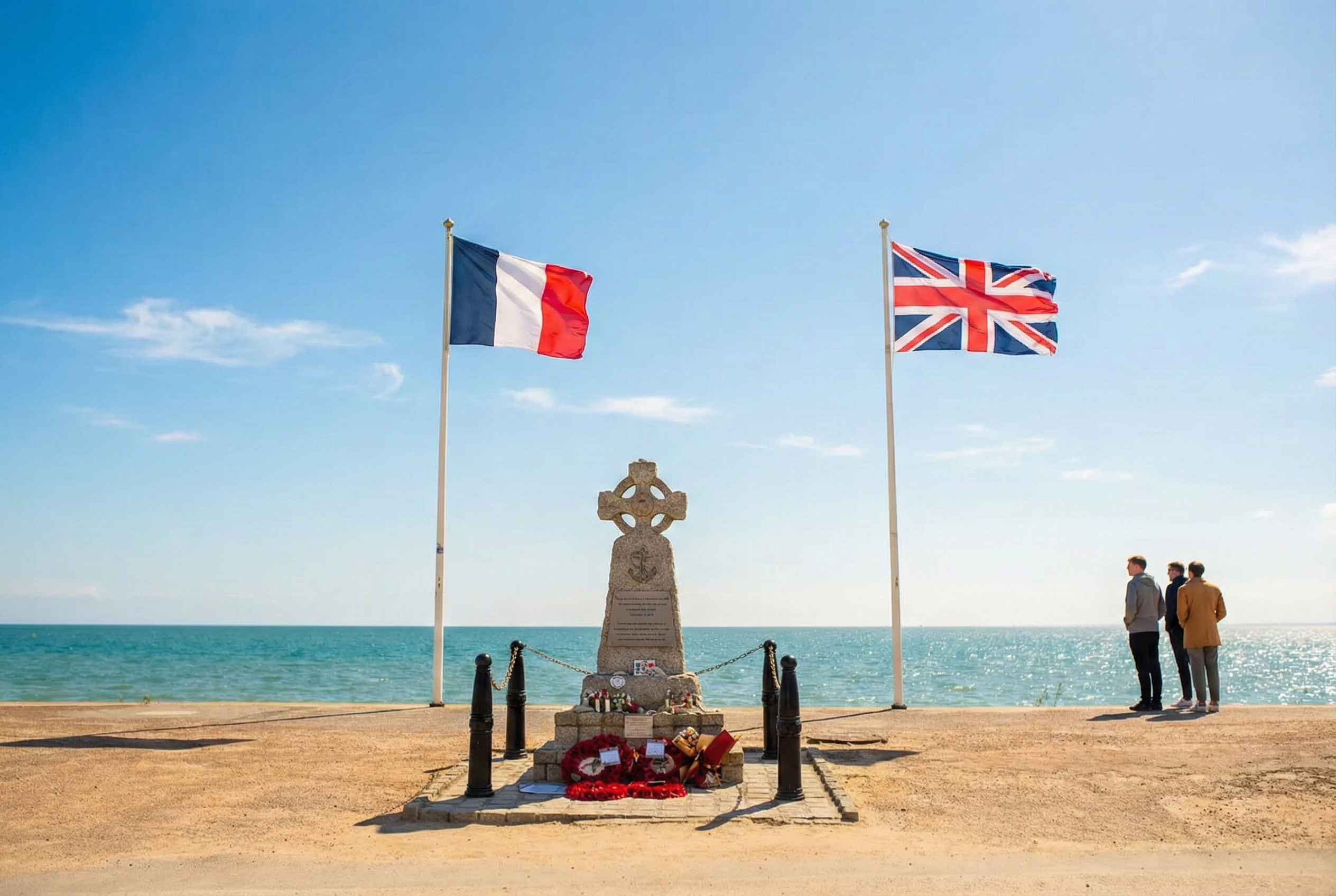
Stand where history changed.
On 6 June 1944, Allied forces crossed the Channel to begin the Normandy landings. Today, the beaches are peaceful, the villages welcoming—but the landscape still holds the memory of the men and women whose lives were changed by D-Day.
Across two guided battlefield tours, follow that story from the airborne landings to the shores, bridges and memorials of Normandy. This is more than seeing the places you have read about. It is an opportunity to understand them, and to remember.
Utah Beach today: a peaceful shore with a remarkable history.
Utah to Omaha.The American story.
Your first guided route connects Utah Beach, Sainte-Mère-Église, Pointe du Hoc and Omaha Beach, continuing to the Normandy American Cemetery and the Overlord Museum. Each stop reveals a different part of the same immense undertaking: securing a foothold in occupied France.
The night before the beaches
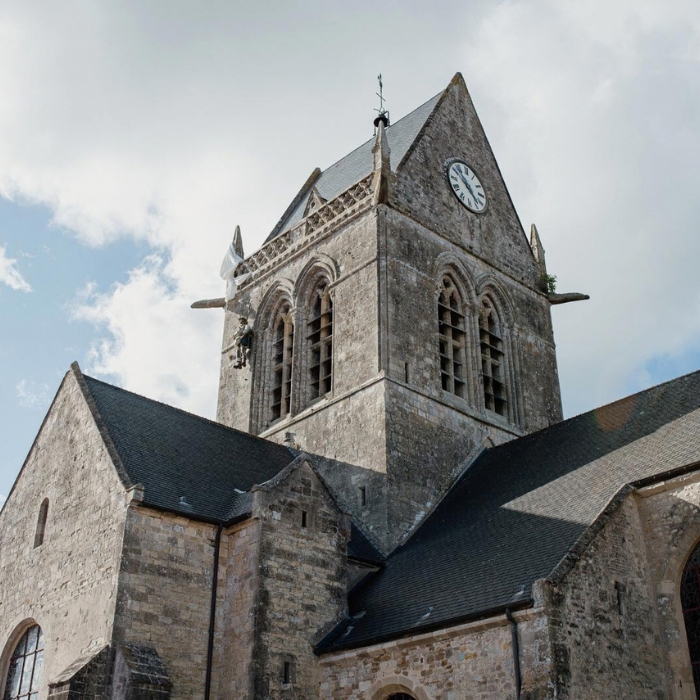
At Sainte-Mère-Église, the story begins in the darkness with American paratroopers. The church tower is forever linked with John Steele, whose parachute caught on the building during the landings—a human story amid the scale of the operation.
Courage on the clifftops
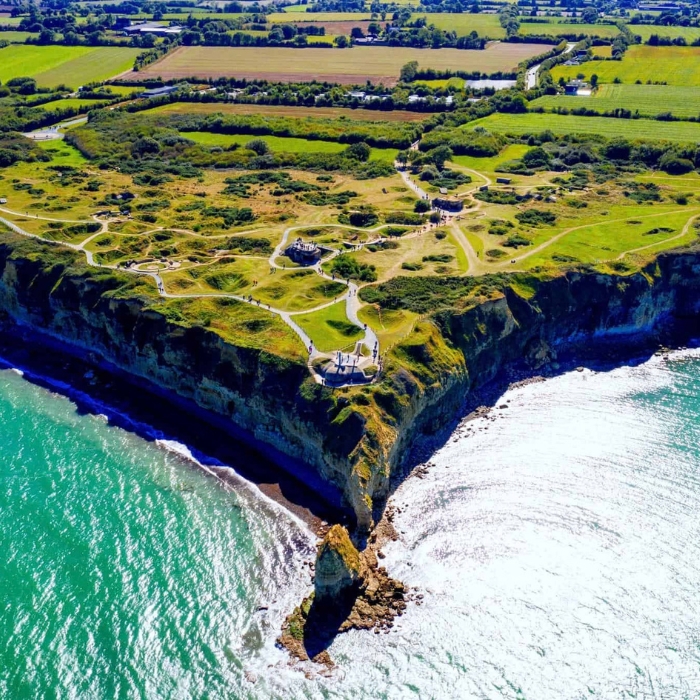
At Pointe du Hoc, US Rangers scaled the cliffs to assault a German gun position. The scarred ground and surviving fortifications bring the terrain into sharp focus: this was a battle fought metre by metre.
The shoreline at Omaha
Omaha was one of D-Day’s hardest-fought landing beaches. Standing beside the coast, with your guide explaining what unfolded here, turns a familiar name from the history books into a place you can begin to understand.
A moment to remember.
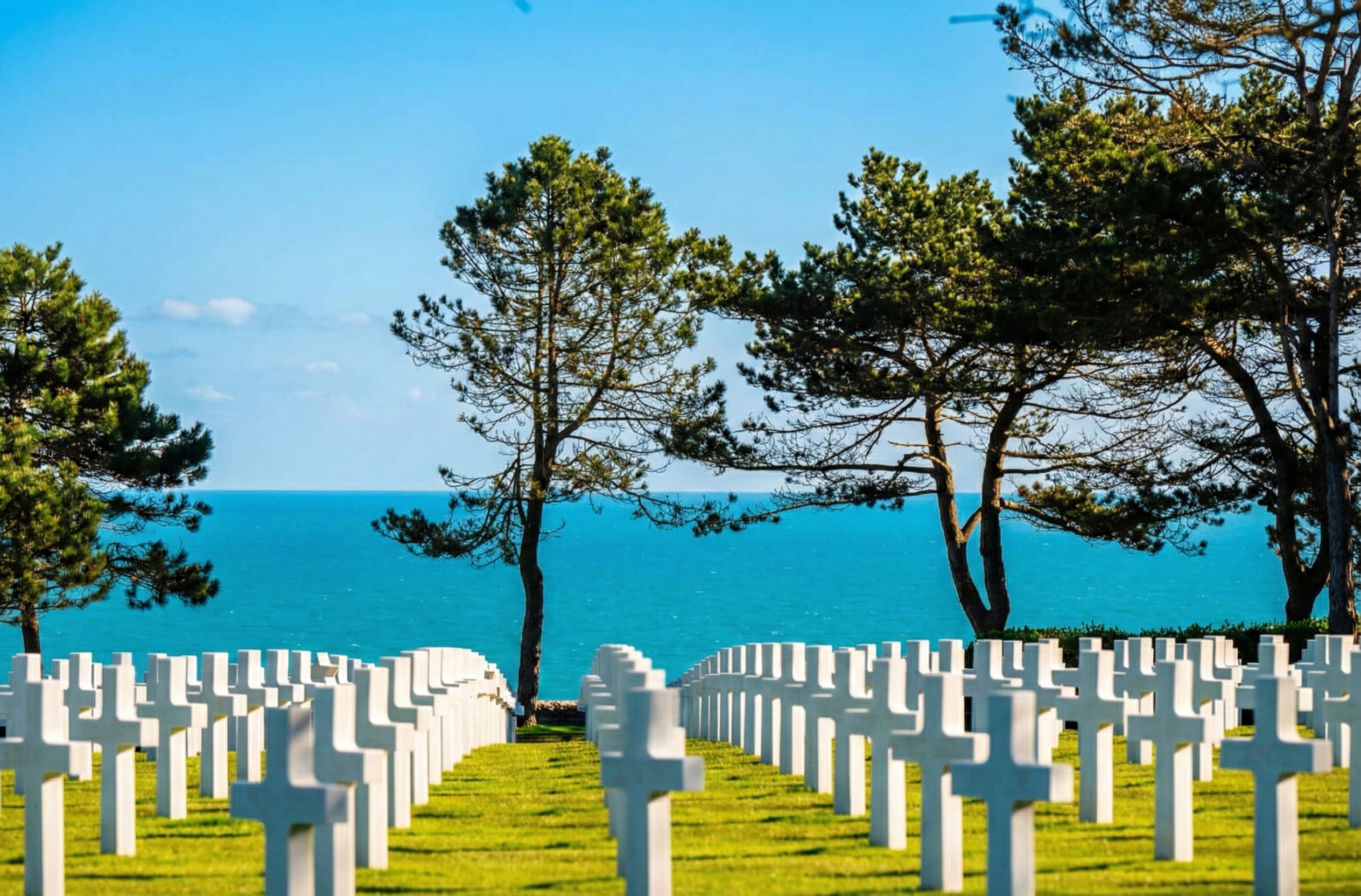
Above Omaha Beach, the Normandy American Cemetery offers a deeply moving contrast to the battlefields. Rows of white headstones stand against lawns and sea views, each marking an individual life.
This is a place to pause. Beyond the strategy, equipment and dates are the people who served—and the families whose stories are part of Normandy’s enduring memory.
History,seen up close.
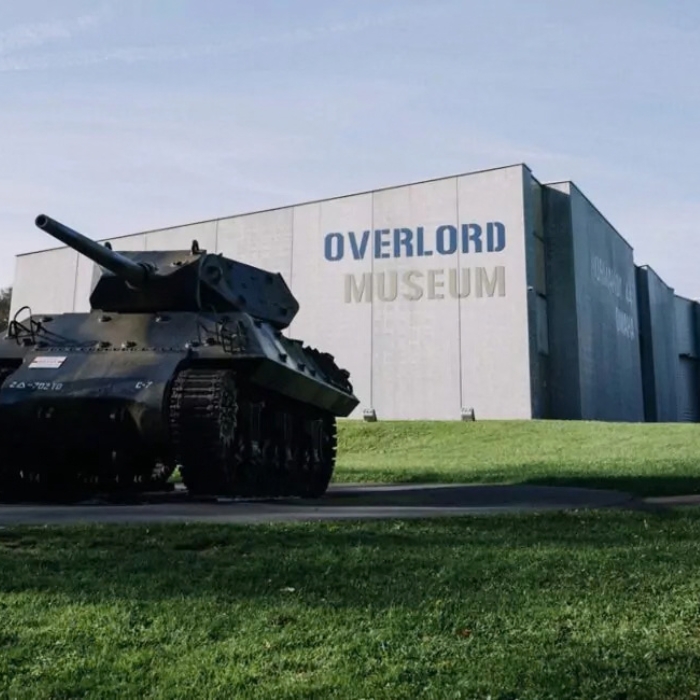
The Overlord Museum connects the landscape to the wider Battle of Normandy through military vehicles, equipment and personal objects. Life-size reconstructions help you picture the conditions in which people lived, worked and fought.
After seeing the sites themselves, these details add another layer to the story—bringing the scale of the campaign and the everyday realities of war into the same frame.
The Overlord Museum.Objects that connect us with the past.
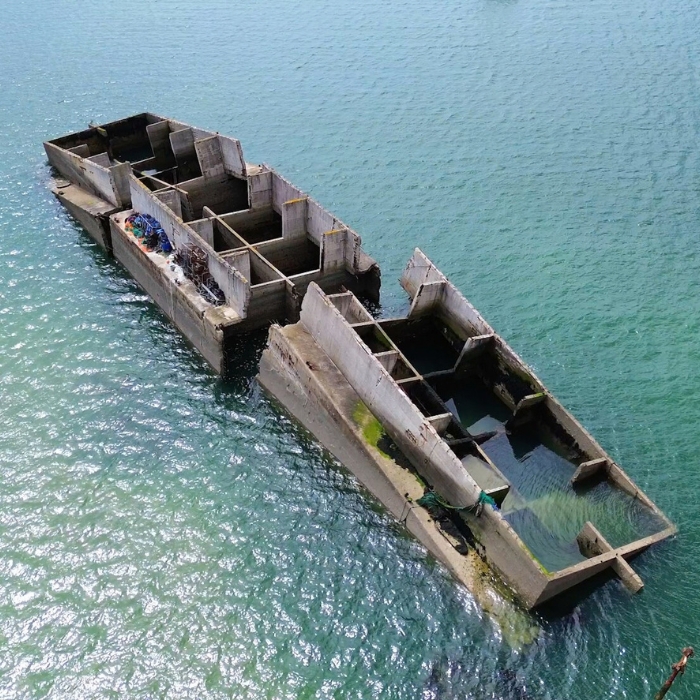
Gold, Juno & Sword.The Allied effort.
Your second guided route follows the British and Canadian landing beaches, then explores Arromanches and its Mulberry Harbour museum, alongside Pegasus Bridge and its museum. Together, these places show that D-Day depended on more than reaching the shore: bridges had to be secured, troops supplied and hard-won positions held.